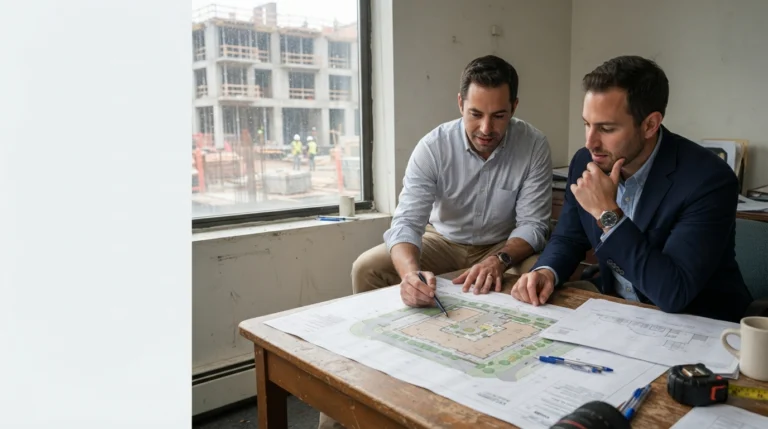
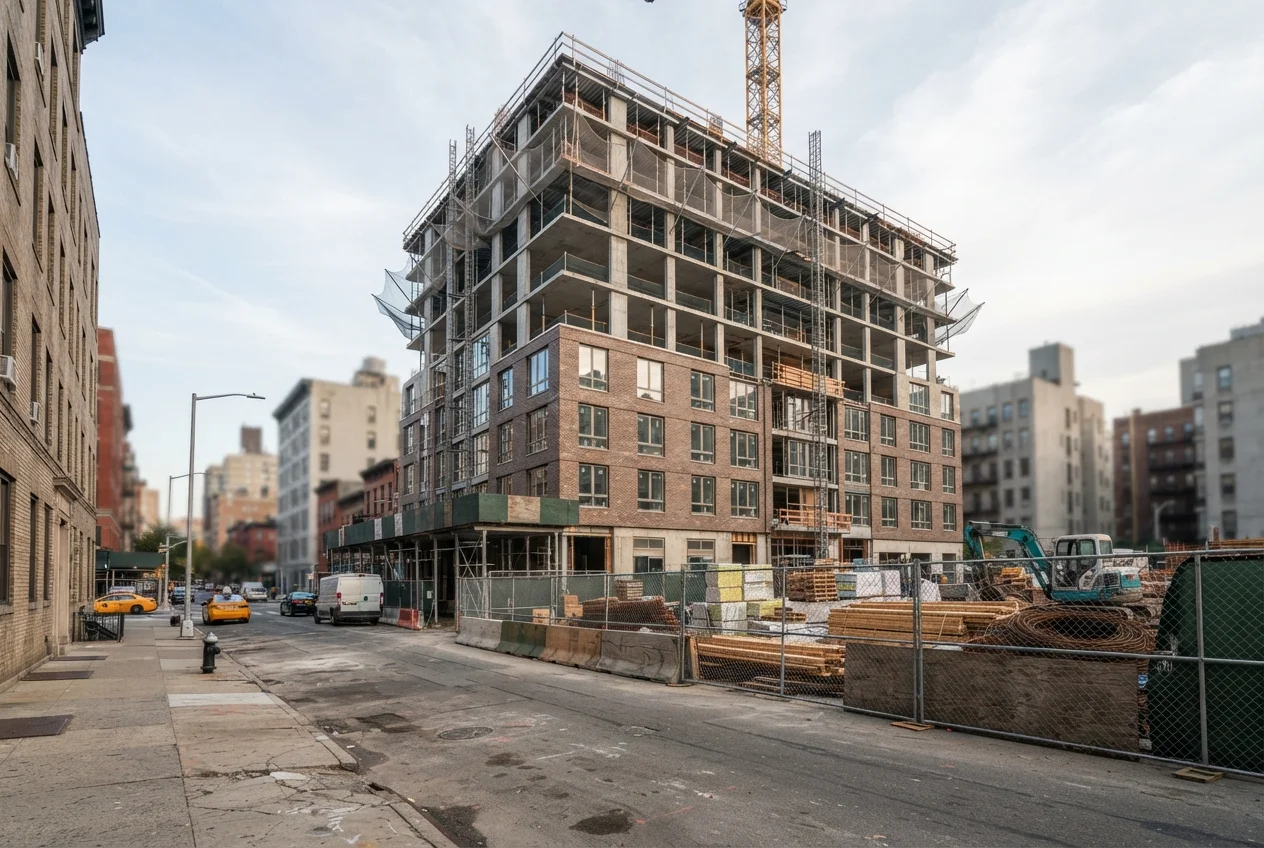
Why Building in New York Costs So Much: The Main Cost Drivers for Developers
Building in New York costs more than in most US cities, and the gap surprises many first-time developers and landowners. This guide breaks down why building in New York costs so much and how experienced teams plan for it.
Quick answer: Building in New York is expensive because of high land prices, labour and materials costs, complex zoning and approvals, strict building and energy codes, high financing costs, and long timelines. Each delay adds carrying costs, so careful planning and feasibility work before buying a site are the best ways to protect a project’s returns.
Developers, landowners, and investors often underestimate how quickly costs add up in New York. Understanding the main cost drivers is the first step in judging whether a project is viable.
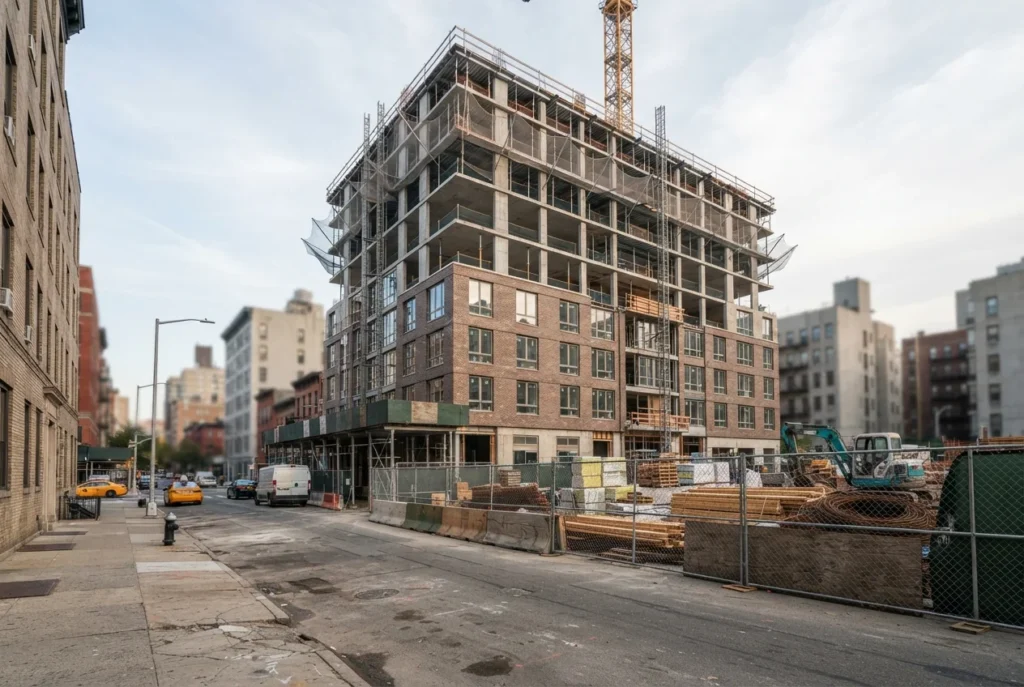
1. Land Costs
Land is often the largest single cost, especially in dense neighbourhoods. What a site can legally hold (its zoning and allowable floor area) largely sets its value.
2. Hard Costs: Labour and Materials
Construction labour, materials, equipment, and site logistics are expensive in dense urban areas. Narrow lots, neighbouring buildings, and limited storage space add further complexity.
3. Soft Costs
Architecture, engineering, legal, surveys, insurance, permits, and consultant fees can add a significant share on top of hard costs.
4. Zoning and Approvals
Zoning determines use, height, density, and parking. Projects needing variances, rezoning, or special permits face extra time, cost, and uncertainty.
5. Building and Energy Codes
New York has demanding building, fire, and energy standards, and building emissions rules affect how new buildings are designed and run. These add upfront cost but can lower operating costs over time.
6. Financing and Interest Rates
Higher interest rates raise the cost of construction loans and reduce what a project can afford to pay for land.
7. Time
Every month of delay adds interest, insurance, taxes, and overhead. Time is one of the most underestimated costs in development.
How Developers Manage These Costs
- Thorough feasibility and zoning analysis before buying a site
- Realistic budgets with contingencies
- Experienced design and construction teams
- Phased or partnership structures that share risk
- Efficient, durable design that lowers long-term operating costs
How Building in New York Costs Compare Across Project Types
- Small residential buildings: simpler structures, but tight lots and neighbour protection add cost.
- Mid-rise apartments: efficient per unit, but need more complex structure, fire safety, and elevators.
- Mixed-use buildings: more design coordination between retail and residential uses.
- Renovations: lower structural cost, but unknown conditions can raise budgets.
Budget Checklist for New York Projects
- Land and closing costs
- Hard costs with a realistic contingency
- Design, engineering, legal, and consultant fees
- Permits, filings, and inspections
- Insurance and site safety
- Construction loan interest and fees
- Leasing or sales costs
Official Resources
Zoning rules are published by the NYC Department of City Planning, and permits and building codes are managed by the NYC Department of Buildings. Reviewing both early helps estimate what building in New York costs for a specific site.
Reducing Risk on Cost
Early cost planning is the best protection. Bring a cost estimator in before buying land, test several design options, and keep a contingency that reflects the site’s unknowns. Fixed-price or guaranteed-maximum-price contracts can move some risk to the builder, but usually at a higher price.
Common Frustrations for Owners and Developers
Why do contractor quotes vary so much for the same building?
Quotes differ because contractors price risk, site access, schedules, and what is included differently. Some exclude items that others include. Compare quotes line by line against the same scope and drawings, and ask what is excluded, before judging which is cheapest.
Why did my project budget grow after design started?
Early budgets are often based on rough assumptions. As design details, code requirements, and site conditions become clear, costs usually rise. A realistic contingency and a cost review at each design stage reduce surprises and help keep the project viable.
Sources and Further Reading
Frequently Asked Questions
What is the biggest cost in New York development?
Land and hard construction costs are usually the largest, but soft costs, financing, and delays can significantly change the final total.
How can a developer reduce risk before buying a site?
By carrying out zoning analysis, feasibility studies, cost estimates, and market research before committing to a purchase.
Do energy codes increase costs?
They can raise upfront costs, but efficient buildings usually cost less to operate and may hold value better.
Considering a property or development opportunity in New York? Learn about our Real Estate division.
How much contingency should a project carry?
It depends on the project stage and risk. Early estimates need larger contingencies than final, fully designed budgets.
Do delays really cost that much?
Yes. Interest, insurance, taxes, and overheads continue every month the project runs late.
About this guide: This guide was prepared by the Globale Green Consortium Editorial Team and reviewed by our Real Estate team, based on the sources listed above and our practical work in this field. It is general information, not professional advice for your specific situation. Read our editorial policy or report an error.