Construction Loans Explained: How Development Financing Works
Construction loans pay for building work in stages rather than as a single lump sum. This guide explains how construction loans work, what lenders expect, and the risks developers need to manage.
Quick answer: A construction loan funds building work in stages called draws, released as work is completed and inspected. Borrowers usually pay interest only on the amount drawn, must contribute equity first, and later repay or refinance the loan when the project is finished and sold or leased.
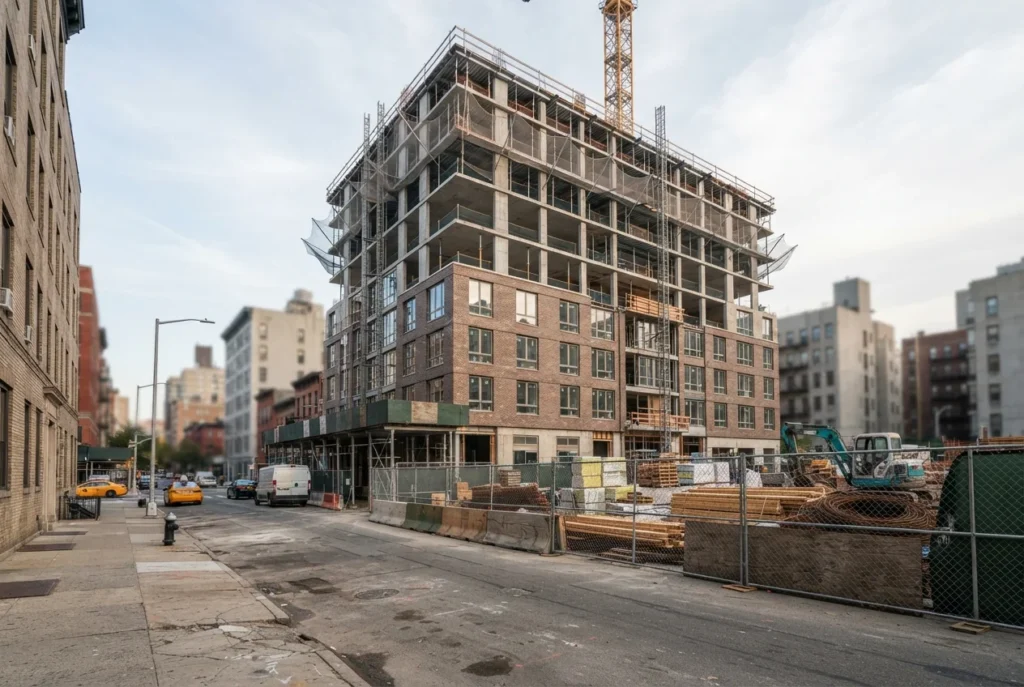
How Construction Loans Work
- The developer contributes equity, often including the land.
- The lender approves a budget and schedule.
- Money is released in draws as work progresses.
- Interest is charged on the drawn amount.
- At completion, the loan is repaid from sales or refinanced into a longer-term loan.
What Lenders Look For
- Developer experience and track record
- Equity contribution
- A detailed budget and contingency
- Realistic market assumptions
- Permits and approvals
Main Risks
- Cost overruns
- Delays that increase interest costs
- Interest rate changes
- Weaker sales or rents at completion
Construction Loans vs Permanent Loans
Construction loans are short term and fund the building phase, with interest usually charged only on money drawn. Permanent loans are longer term and are secured on a completed, income-producing property. Many projects refinance construction loans into permanent loans once buildings are finished and leased.
Costs of Construction Loans
- Interest on drawn funds
- Arrangement and exit fees
- Inspection and monitoring fees
- Legal and valuation costs
How to Prepare for a Lender
- A detailed budget with contingency
- Approved plans and permits, or a clear path to them
- Evidence of equity
- The team’s track record
- Market evidence for rents or sales
For general background on borrowing and investment products, see Investor.gov.
Common Construction Loan Terms
- Loan-to-cost: the share of total project cost the lender funds.
- Draw schedule: when and how funds are released.
- Retainage: a portion held back until work is complete.
- Completion guarantee: a promise that the project will be finished.
- Maturity date: when the loan must be repaid.
Managing Draws Smoothly
Keep invoices, lien waivers, and progress photos organised. Lenders usually inspect work before each draw, so clear records avoid delays in payment to contractors.
What If the Project Runs Over Budget?
Most construction loans require the borrower to cover overruns with extra equity before further draws. A realistic contingency and regular cost tracking reduce this risk.
Interest Rate Risk
Many construction loans have floating rates. Rising rates increase interest costs during the build, so developers test budgets at higher rates or use hedging where available.
Choosing a Lender
Compare lenders on more than interest rate. Consider fees, draw speed, flexibility if the schedule changes, and experience with your project type. A lender that understands development can save time and cost when problems arise.
Summary
Construction loans release money in draws, charge interest on drawn funds, and require equity and a clear budget. Plan for delays, overruns, and interest rate changes, and choose a lender experienced with development.
Explore Real Estate Opportunities
Our Real Estate division works on development opportunities in New York. Learn more about Real Estate Investment Partnerships or read 10 Questions to Ask Before Investing in a Real Estate Development Project.
Common Borrower Frustrations
Why is my draw taking so long?
Draws are delayed when documents are missing, inspections are pending, or work does not match the approved budget line. Submit complete invoices, lien waivers, and progress evidence on time, and keep the budget updated so the lender can approve payments quickly.
Why does the lender require so much equity?
Equity protects the lender if costs rise or values fall. Required equity depends on the project, the borrower’s experience, and market conditions. Stronger track records and well-prepared projects can improve terms over time.
Sources and Further Reading
Frequently Asked Questions
What is a construction draw?
A staged release of loan funds after work is completed and verified.
Do construction loans cover the full cost?
Usually not. Lenders typically require the developer to contribute equity.
What happens when construction ends?
The loan is repaid through sales or refinanced into a permanent loan.
This article is general information, not financial advice. Explore our Real Estate Investment Partnerships.
Can I refinance before completion?
Sometimes, but most refinancing happens once the building is complete and producing income.
What if interest rates rise during construction?
Floating-rate costs increase. Test your budget at higher rates.
About this guide: This guide was prepared by the Globale Green Consortium Editorial Team and reviewed by our Real Estate team, based on the sources listed above and our practical work in this field. It is general information, not professional advice for your specific situation. Read our editorial policy or report an error.