Broiler FCR: What It Is and How to Improve It
Broiler FCR, or feed conversion ratio, is one of the most important numbers on any meat chicken farm. Because feed is the largest cost, improving broiler FCR has a direct effect on profit.
Quick answer: Feed conversion ratio (FCR) is the amount of feed a broiler eats to gain one unit of body weight. For example, 1.6 kg of feed for 1 kg of live weight gives an FCR of 1.6. Because feed is usually the largest cost in broiler production, a lower FCR means higher profit. FCR improves with good chick quality, balanced nutrition, good feed quality, correct temperature and ventilation, clean water, and strong biosecurity.
How to Calculate FCR
FCR = total feed consumed ÷ total live weight gained.
Many farmers also use a corrected FCR that accounts for mortality and the weight of birds that died, which gives a truer picture of flock performance.
Why FCR Matters
Feed often makes up well over half of broiler production costs. Even a small improvement in FCR across a flock can make a meaningful difference to profit.
What Causes Poor FCR?
- Low-quality or poorly formulated feed
- Mycotoxins in feed ingredients
- Heat stress or cold stress
- Poor ventilation and high ammonia
- Disease, especially gut health problems
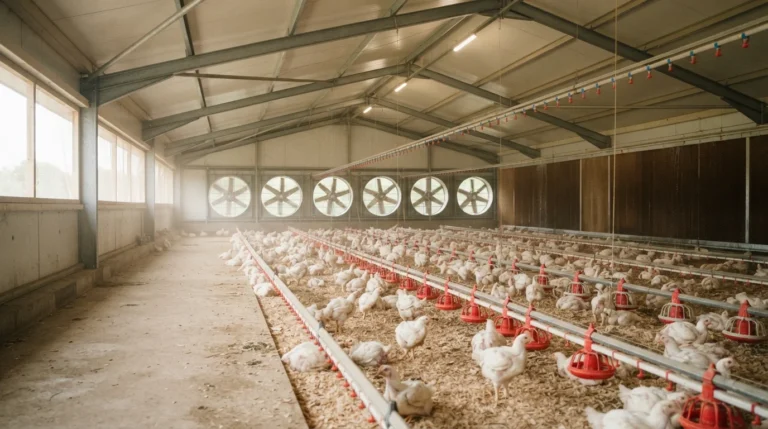
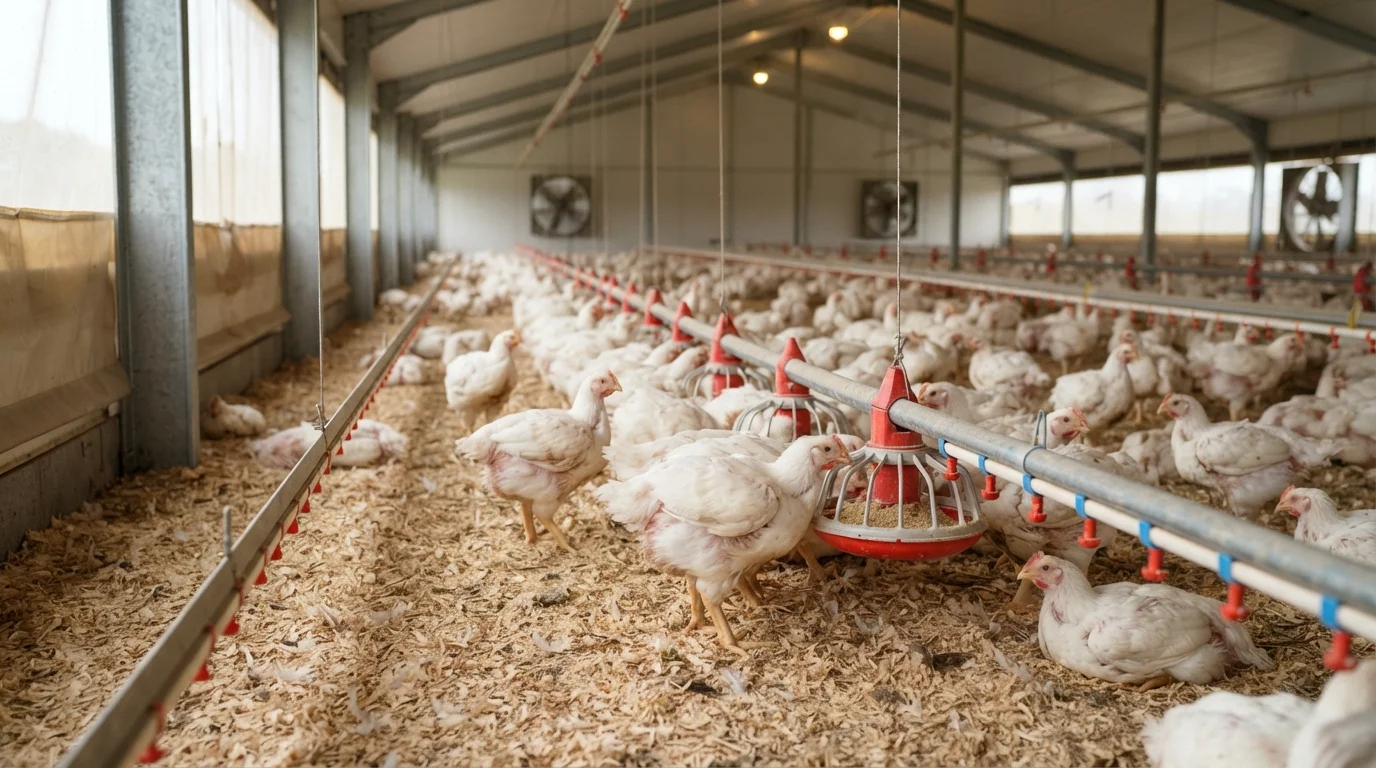
- Feed wastage from badly adjusted feeders
- Poor water quality or restricted water access
- Uneven chick quality
How to Improve Broiler FCR
1. Feed Formulation and Quality
Use feeds balanced for energy, amino acids, vitamins, and minerals at each growth phase. Test raw materials and control mycotoxins.
2. Brooding and Environment
Correct temperature in the first days sets up the whole flock. Maintain good ventilation, litter quality, and air quality throughout.
3. Water
Provide clean, cool water with enough drinker space. Birds that drink well eat well.
4. Feeder Management
Adjust feeder height as birds grow to reduce spillage.
5. Health and Biosecurity
Follow vaccination programs, control visitors, and clean thoroughly between flocks.
6. Record Keeping
Track feed, weights, and mortality weekly to catch problems early.
Calculate Broiler FCR in Seconds
Use our free Broiler FCR Calculator to work out broiler FCR, mortality, daily gain, and production efficiency for any flock.
Tracking Broiler FCR Over Time
Record feed deliveries, feed left at the end of each flock, bird weights, and mortality. Compare broiler FCR between flocks of similar age and weight. A steady rise signals a problem with feed, environment, or health that should be investigated early.
Breed Performance Targets
Breeding companies publish performance objectives for their birds, such as Aviagen for Ross broilers. These targets help you compare your broiler FCR with what the breed can achieve under good management. General guidance on poultry production is available from FAO poultry production resources.
Broiler FCR and Profit
Consider a flock that eats 36 tonnes of feed. Improving broiler FCR by just 0.05 on the same live weight can save more than a tonne of feed. Across several flocks a year, this becomes a significant saving, which is why broiler FCR is the number most integrators and farm managers watch closest.
Real Problems Broiler Farmers Face
Feed prices keep rising. How can I still make a profit?
When feed prices rise, every point of FCR matters more. Reduce feed wastage, check feeder heights, keep water and ventilation right, and review feed quality with your supplier. Also compare the cost per kilogram of live weight produced, not just the price per bag.
My chicks were weak from day one. Is it my fault?
Poor chick quality can come from the hatchery, transport, or brooding conditions. Record chick weight, uniformity, and first-week mortality for every batch. If problems repeat from one hatchery, share the records with the supplier. Good brooding temperature and early water access also matter.
Sources and Further Reading
Frequently Asked Questions
What is a good FCR for broilers?
It depends on breed, age, and market weight. Modern commercial broilers commonly achieve FCRs in the range of about 1.5 to 1.8 at typical market weights under good management.
Does heavier market weight worsen FCR?
Generally yes. FCR tends to rise as birds get older and heavier because more feed goes to maintenance.
Can feed additives improve FCR?
Some additives, such as enzymes, may help when used correctly, but they cannot replace good formulation, management, and health control.
Want to improve flock performance and feed costs? Talk to our Agricultural Consultancy team about poultry nutrition and farm management.
How much does first-week mortality matter?
A lot. High early mortality often signals chick quality or brooding problems that affect the whole flock.
Can power cuts affect FCR?
Yes. Ventilation and lighting failures stress birds. Backup power protects performance.
About this guide: This guide was prepared by the Globale Green Consortium Editorial Team and reviewed by our Agricultural Consultancy team, based on the sources listed above and our practical work in this field. It is general information, not professional advice for your specific situation. Read our editorial policy or report an error.