Heat Stress in Poultry: Signs, Causes, and How to Prevent It
Heat stress in poultry is one of the biggest causes of summer losses on broiler and layer farms. This guide explains how to spot heat stress in poultry early and the practical steps that reduce its impact.
Quick answer: Heat stress happens when birds cannot lose enough body heat. Signs include panting, wings held away from the body, reduced feed intake, more drinking, lethargy, and higher mortality. Prevent it with good ventilation and air speed, cool clean water, lower stocking density in hot periods, feeding in cooler hours, and electrolytes where advised.
Why Are Chickens So Sensitive to Heat?
Chickens have no sweat glands. They lose heat mainly by panting and through air moving over their bodies. Heavy, fast-growing broilers and high-producing layers make a lot of metabolic heat, so hot, humid weather quickly overwhelms them.
Signs of Heat Stress in Poultry
- Panting with open beaks
- Wings held away from the body
- Birds crowding near walls, drinkers, or fans
- Lower feed intake and higher water intake
- Lethargy, and in severe cases collapse and death
- In layers, fewer and thinner-shelled eggs
What Makes Heat Stress Worse?
- High humidity, which reduces cooling by panting
- Poor ventilation and low air speed
- High stocking density
- Heavy birds close to market weight
- Warm or limited drinking water
How to Prevent Heat Stress
Housing and Ventilation
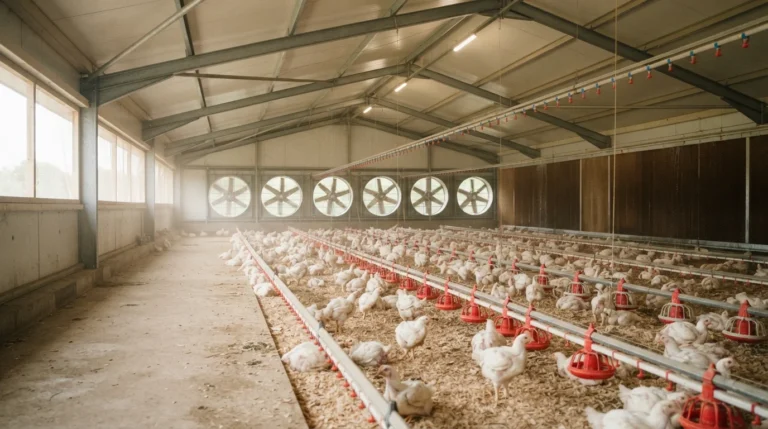
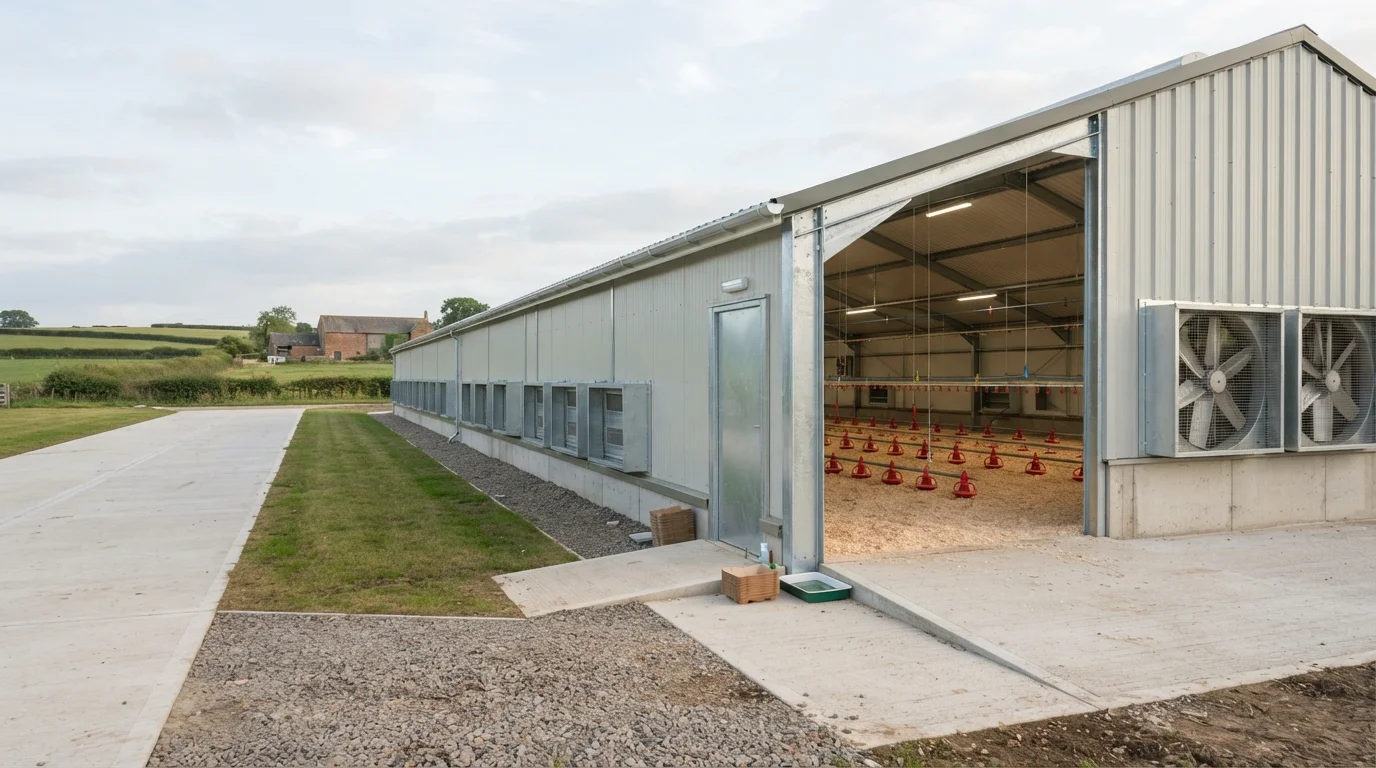
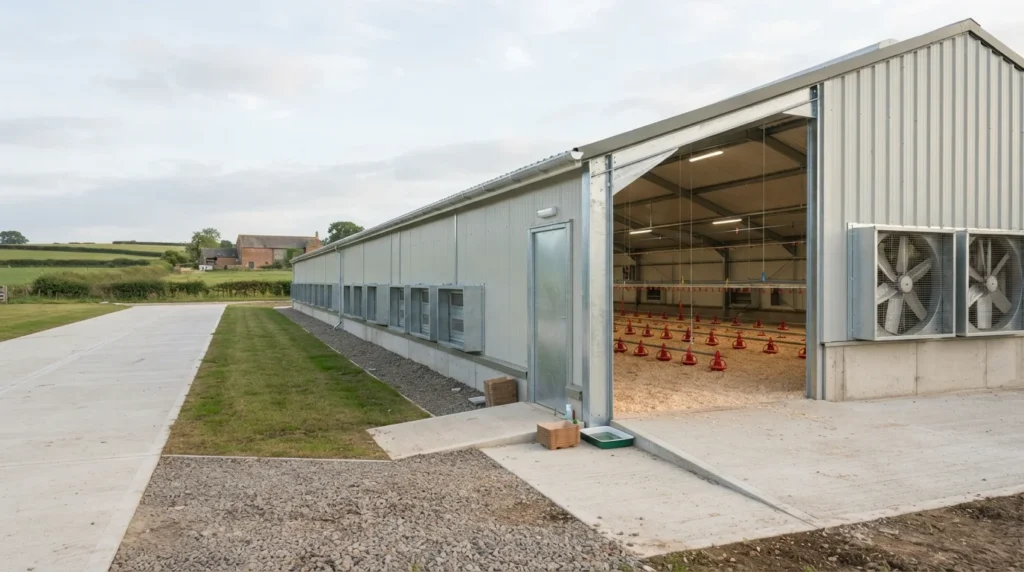
Increase air movement, use evaporative cooling where suitable, insulate roofs, and provide shade.
Water
Provide plenty of cool, clean water and enough drinker space. Flush lines in hot weather.
Feeding
Feed during cooler parts of the day and avoid feeding at peak heat. Your nutritionist may adjust diets for hot seasons.
Management
Reduce stocking density in hot months, avoid handling birds during the heat of the day, and monitor house temperature and humidity.
Emergency Steps During a Heat Wave
- Increase air speed through the house.
- Check that every drinker line is flowing.
- Remove feed during the hottest hours if advised.
- Avoid moving, weighing, or catching birds.
- Walk the house often and act quickly on distressed birds.
Long-Term Planning for Heat Stress in Poultry
- Roof insulation and reflective roofing
- Tunnel ventilation and evaporative cooling pads
- Shade trees or structures around open houses
- Seasonal stocking density plans
- Backup power for fans
Impact on Performance
Heat stress in poultry reduces feed intake, growth, and egg output, and worsens FCR. Track house temperature and flock results together to see how much hot weather costs your farm. See FAO poultry production resources for general poultry management guidance.
Heat Stress in Layers vs Broilers
Broilers near market weight produce the most body heat and are usually hit hardest. Layers show heat stress through fewer eggs, smaller eggs, and thinner shells. Both need extra ventilation and water in hot weather, but layers also need their feed and calcium supply reviewed so shell quality holds up.
Summary
Birds cannot sweat, so ventilation, air speed, cool water, stocking density, and feeding times are your main tools against heat. Prepare houses before summer, act fast during heat waves, and track performance to measure the real cost of hot weather.
Get Expert Support
If hot weather keeps hurting your flock results, our Poultry Farm Consultancy team can review your housing, ventilation, water, and feeding program and suggest practical changes before the next summer. You can also check flock efficiency with our Broiler FCR Calculator.
Real Problems Farmers Report in Summer
My birds die in the afternoon heat even with fans running. Why?
Fans may not be moving enough air across the birds, or humidity may be too high for cooling to work. Check air speed at bird level, fan maintenance, curtain leaks, and stocking density. Heavy birds near market weight need the most cooling, especially during afternoon peaks.
Should I stop feeding during the hottest hours?
Many farms reduce or withdraw feed during peak heat because digestion produces body heat. Birds then eat more in cooler hours. Always keep water available. Follow advice from your nutritionist or veterinarian for your breed and system.
Sources and Further Reading
Frequently Asked Questions
At what temperature do chickens get heat stress?
Risk rises as temperatures climb, especially with high humidity. Older, heavier broilers are affected at lower temperatures than young birds.
Do electrolytes help with heat stress?
They can help birds maintain water and mineral balance in hot weather when used as advised.
Does heat stress affect FCR?
Yes. Heat stress lowers feed intake and growth, which usually worsens FCR and increases mortality.
Need help with hot-season flock management? See our Poultry Farm Consultancy.
Do cooling pads always help?
They help most in dry heat. In very humid conditions their effect is smaller.
Can heat stress cause long-term damage?
Yes. Repeated heat stress reduces growth, egg quality, and immunity.
About this guide: This guide was prepared by the Globale Green Consortium Editorial Team and reviewed by our Agricultural Consultancy team, based on the sources listed above and our practical work in this field. It is general information, not professional advice for your specific situation. Read our editorial policy or report an error.