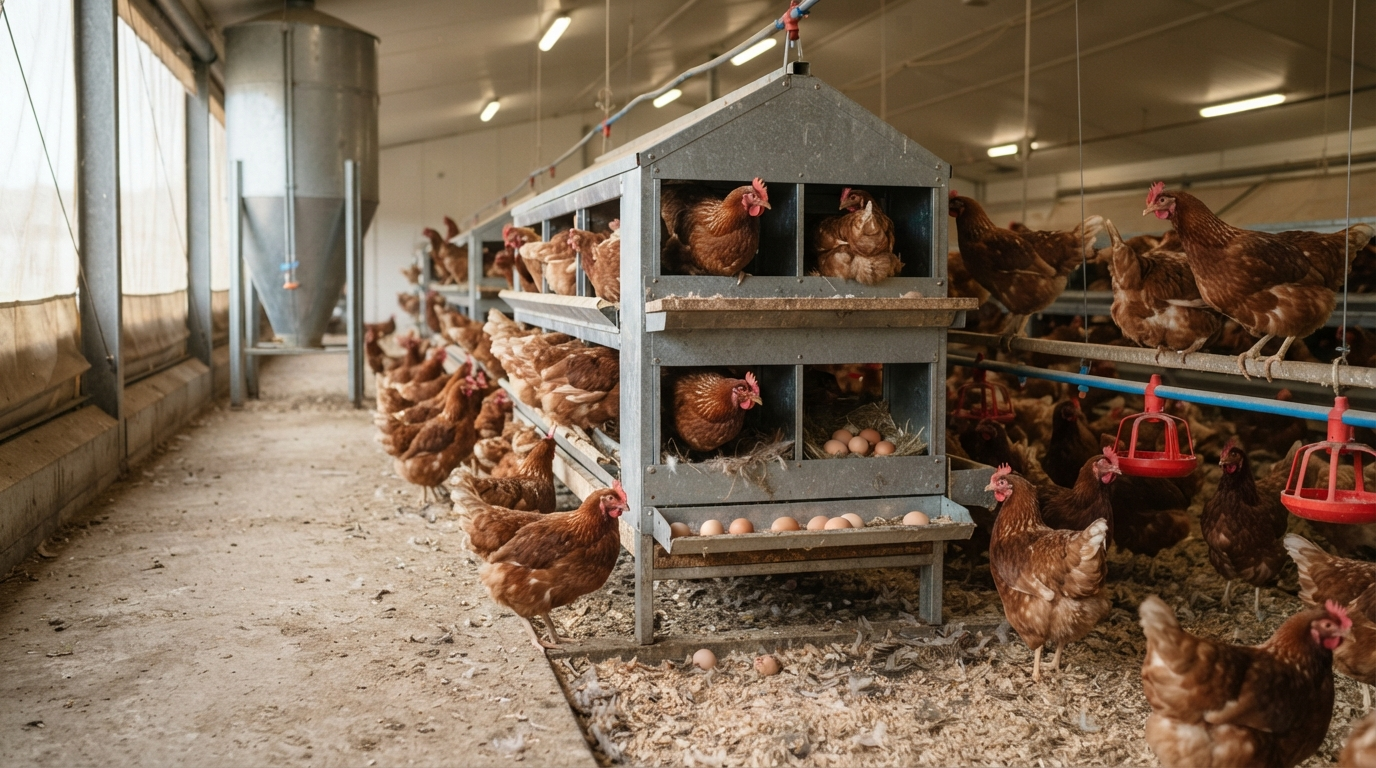
Why Did My Hens Stop Laying? 9 Common Causes of Egg Production Drops
When hens stop laying, farmers lose income every day until the cause is found. This guide lists the common reasons hens stop laying and a simple way to find the cause.
Quick answer: Egg production usually drops because of changes in light hours, heat stress, nutrition or water problems, disease, parasites, stress from handling or predators, moulting, or the flock’s age. The quickest way to find the cause is to check records for when the drop started and what changed at that time.
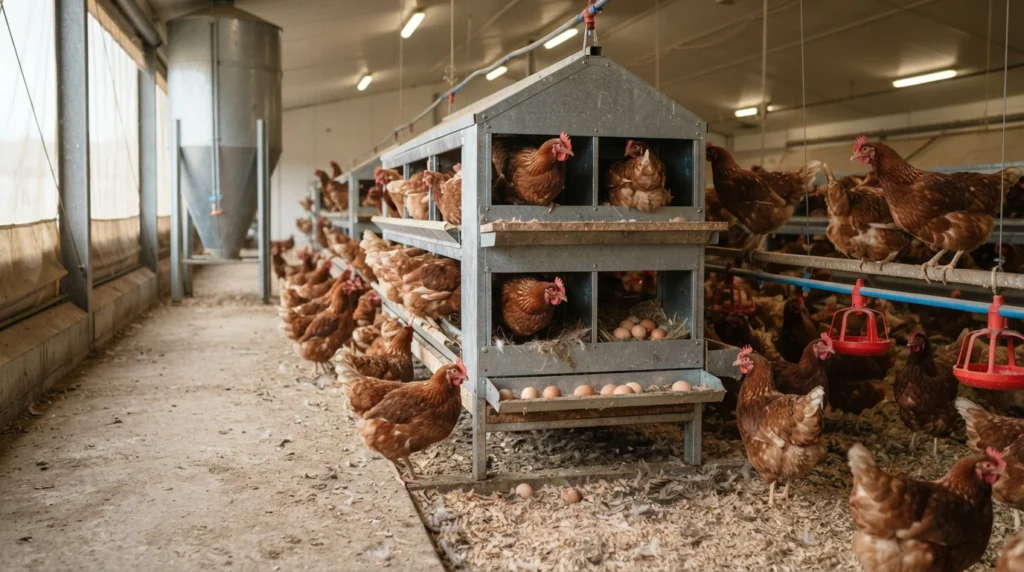
1. Light Hours
Laying is driven by day length. A reduction in light hours or inconsistent lighting can reduce production.
2. Heat Stress
Hot weather lowers feed intake, egg numbers, and shell quality.
3. Nutrition Problems
Low energy, protein, calcium, or phosphorus, or a sudden feed change, can reduce laying and shell quality.
4. Water Problems
Blocked drinkers or poor water quality quickly reduce feed intake and production.
5. Disease
Several respiratory and viral diseases cause sudden drops. Contact a veterinarian when a drop is sudden or birds look sick.
6. Parasites
Mites and worms stress birds and reduce laying.
7. Stress
Predators, loud noise, handling, and overcrowding can all cause temporary drops.
8. Moulting
Birds naturally stop laying while they replace feathers.
9. Flock Age
Production naturally declines as a flock gets older.
How to Find the Cause
- Check records for the date the drop began.
- Review changes to feed, lighting, weather, or management around that date.
- Check water flow and feed intake.
- Inspect birds for signs of disease or parasites.
- Get a veterinary diagnosis if many birds are sick or mortality rises.
Normal vs Abnormal Drops
Some changes are normal: production falls gradually with age, and birds stop during a moult. A sudden drop across the flock, or a drop with sick or dying birds, is abnormal and needs quick action.
Records That Help When Hens Stop Laying
- Daily egg count
- Feed and water intake
- House temperature and lighting hours
- Mortality
- Any changes to feed, staff, or routines
With these records, it is much easier to find why hens stop laying and to fix it before the loss grows.
Prevention Tips
- Keep lighting programs consistent
- Provide balanced layer feed with enough calcium
- Keep water clean and flowing
- Control mites and worms
- Follow a vaccination program advised by your veterinarian
For general poultry guidance, see FAO poultry production resources.
When to Call a Veterinarian
Call a veterinarian quickly if hens stop laying suddenly and you also see coughing, swollen faces, diarrhoea, depression, or rising mortality. Some poultry diseases spread fast and may need to be reported to authorities. Early diagnosis protects the rest of the flock and neighbouring farms.
Summary
Check light, heat, feed, water, health, parasites, stress, moulting, and age. Records showing when the drop began usually point to the cause. Sudden drops with sick birds need a veterinarian quickly.
Get Expert Support
Our Poultry Farm Consultancy team can review layer feed, lighting, housing, and records to help your flock get back to target production. Share your flock age, breed, and recent egg records to get started with a review.
Real Problems Layer Farmers Report
Egg production dropped after we changed feed. Should we switch back?
A sudden drop after a feed change often points to the feed, especially if energy, calcium, or ingredient quality changed. Check the feed label and delivery records, compare with the previous feed, and discuss with your supplier and nutritionist before deciding.
Why are we getting more cracked and thin-shelled eggs?
Thin shells are commonly linked to calcium and phosphorus supply, vitamin D, heat stress, older hens, and some diseases. Review the diet and calcium source, house temperature, and flock age, and ask a veterinarian if other signs of illness appear.
Sources and Further Reading
Frequently Asked Questions
Can a feed change reduce egg production?
Yes. Sudden changes or poorly balanced feed can reduce laying for several days or longer.
How much light do laying hens need?
Commercial layers are usually managed on a set lighting program. Follow the program recommended for your breed.
Do thin eggshells mean a calcium problem?
Often, but heat stress, age, and disease can also cause thin shells.
Want help improving layer performance? Talk to our Poultry Farm Consultancy team.
Can stress from staff changes affect laying?
Yes. Changes in routine, noise, and handling can cause temporary drops.
When should a layer flock be replaced?
When production and egg quality fall below the level that covers feed and other costs.
About this guide: This guide was prepared by the Globale Green Consortium Editorial Team and reviewed by our Agricultural Consultancy team, based on the sources listed above and our practical work in this field. It is general information, not professional advice for your specific situation. Read our editorial policy or report an error.